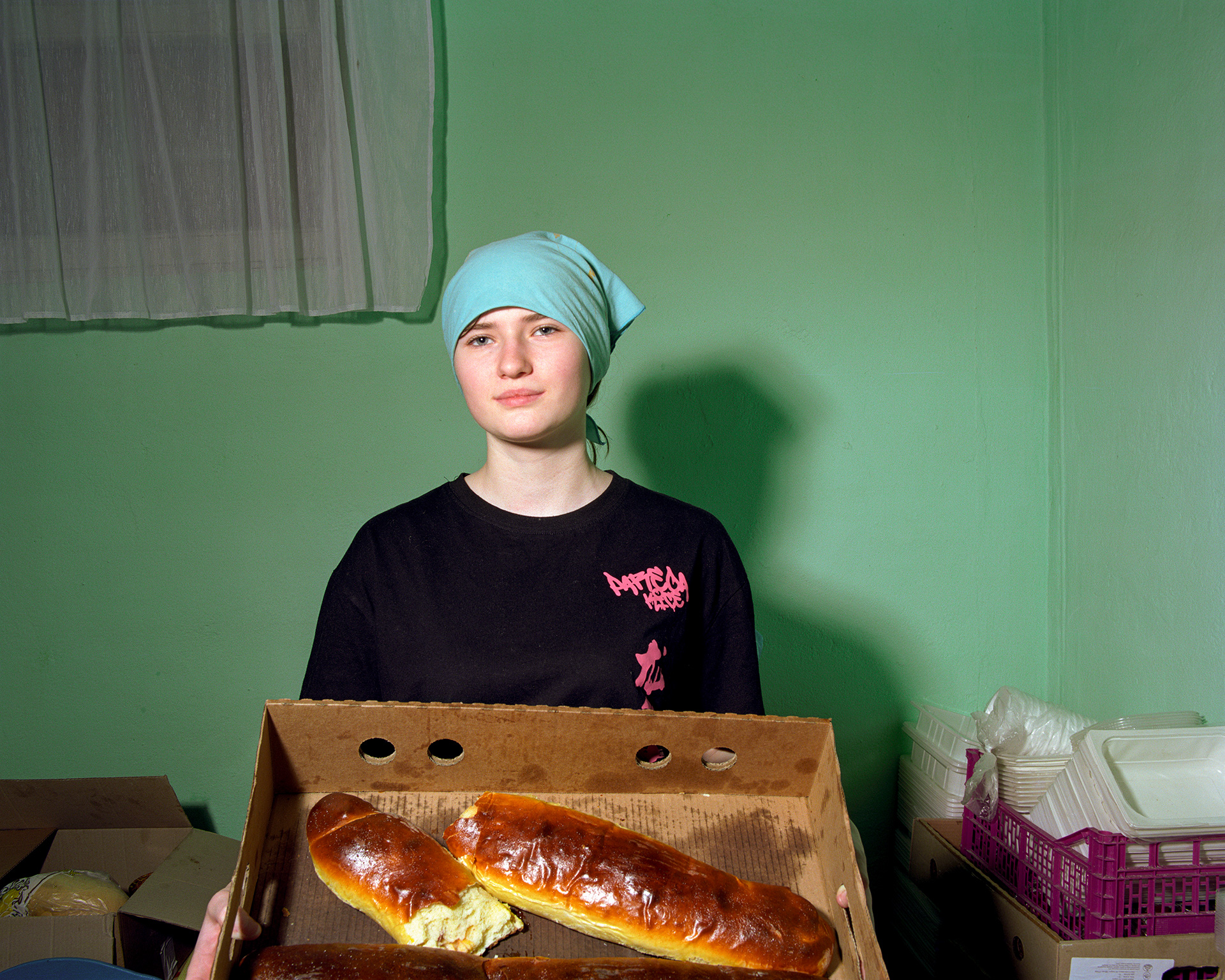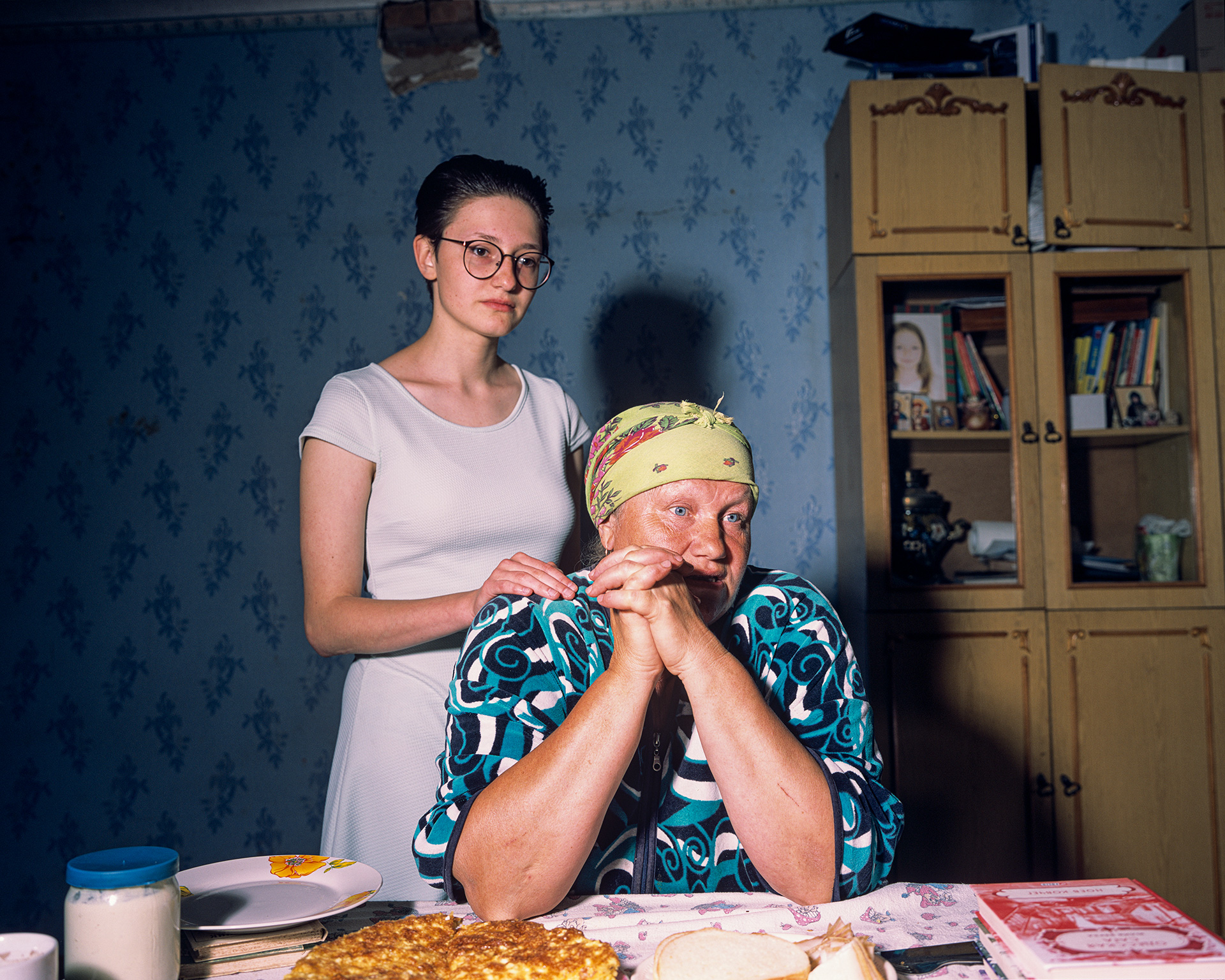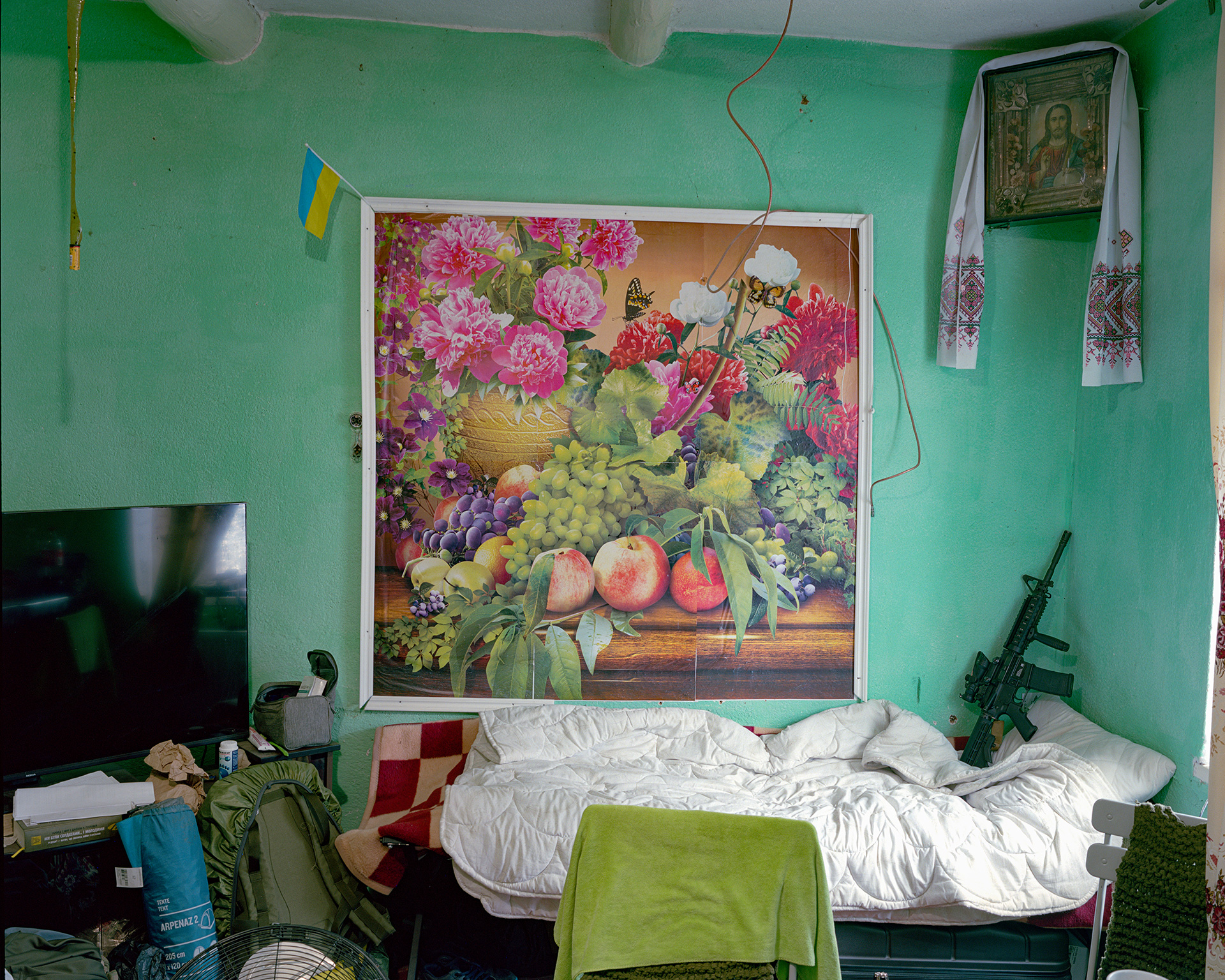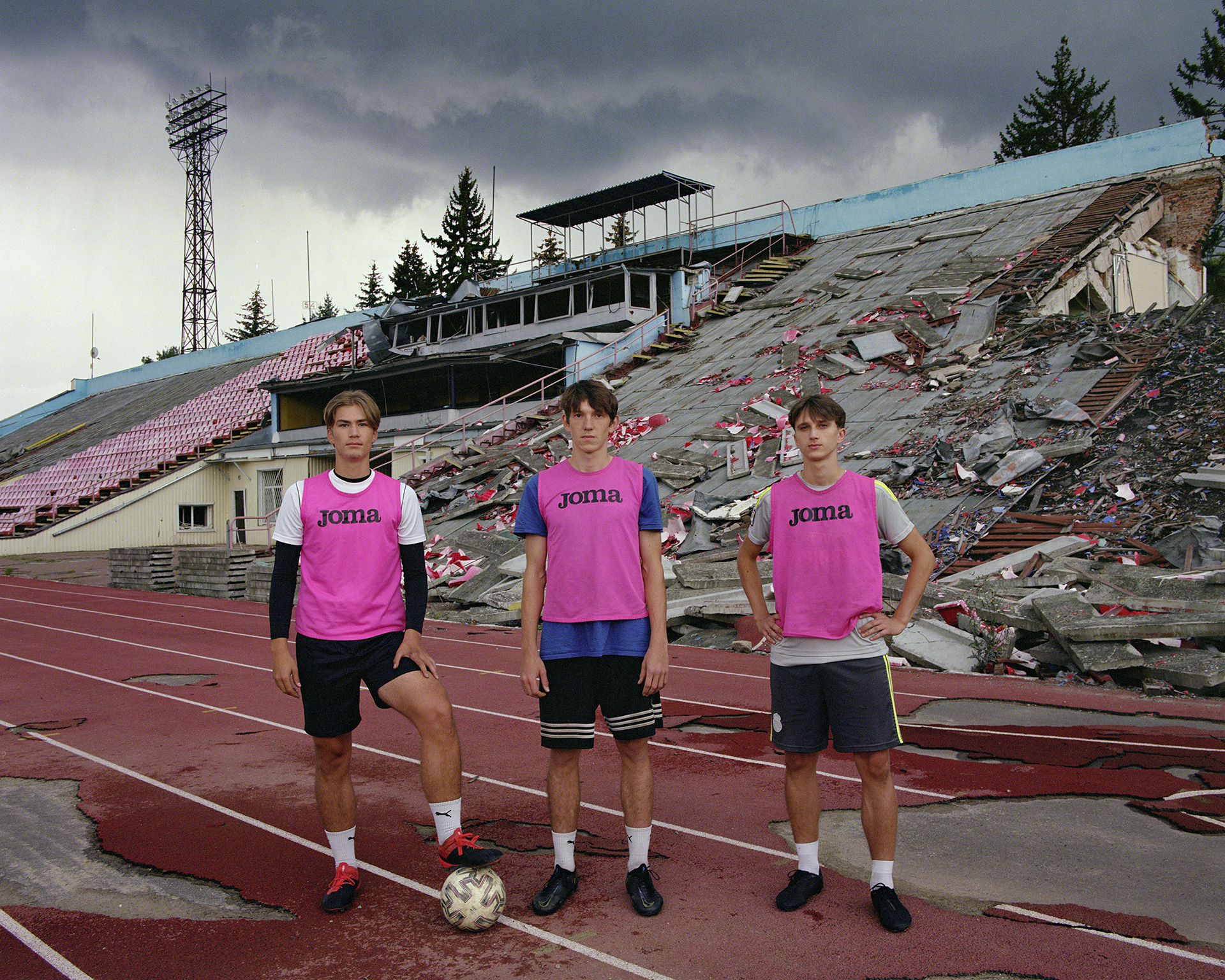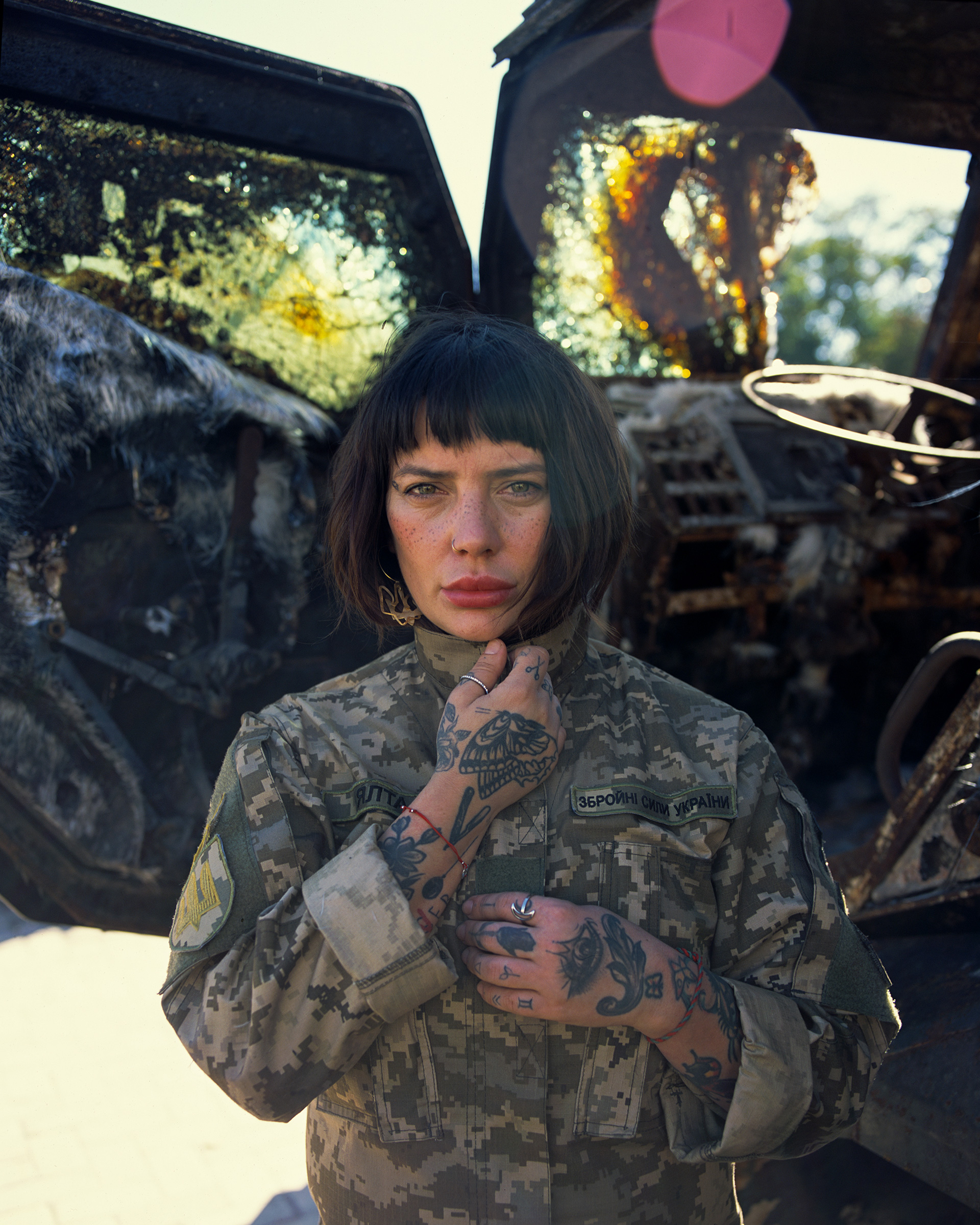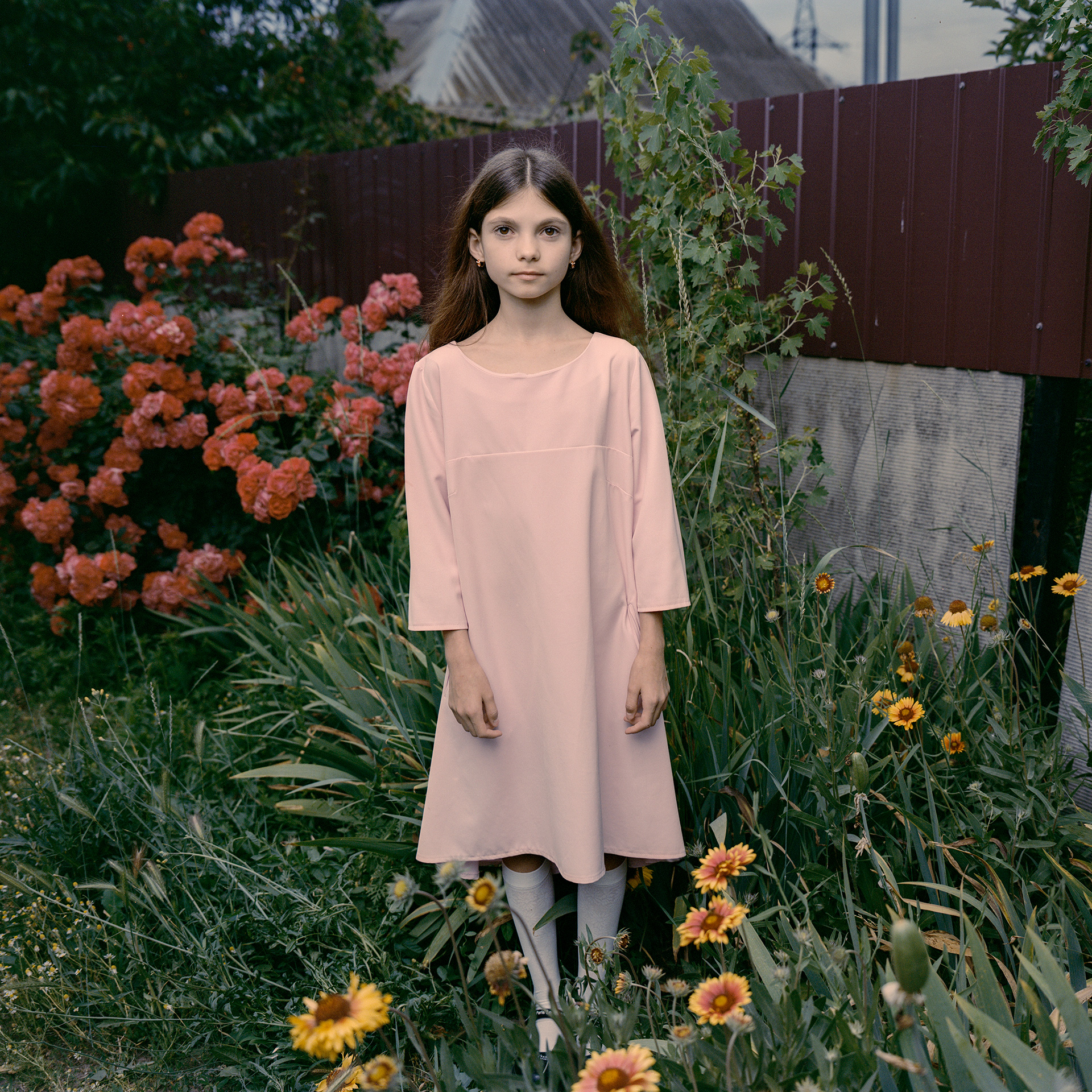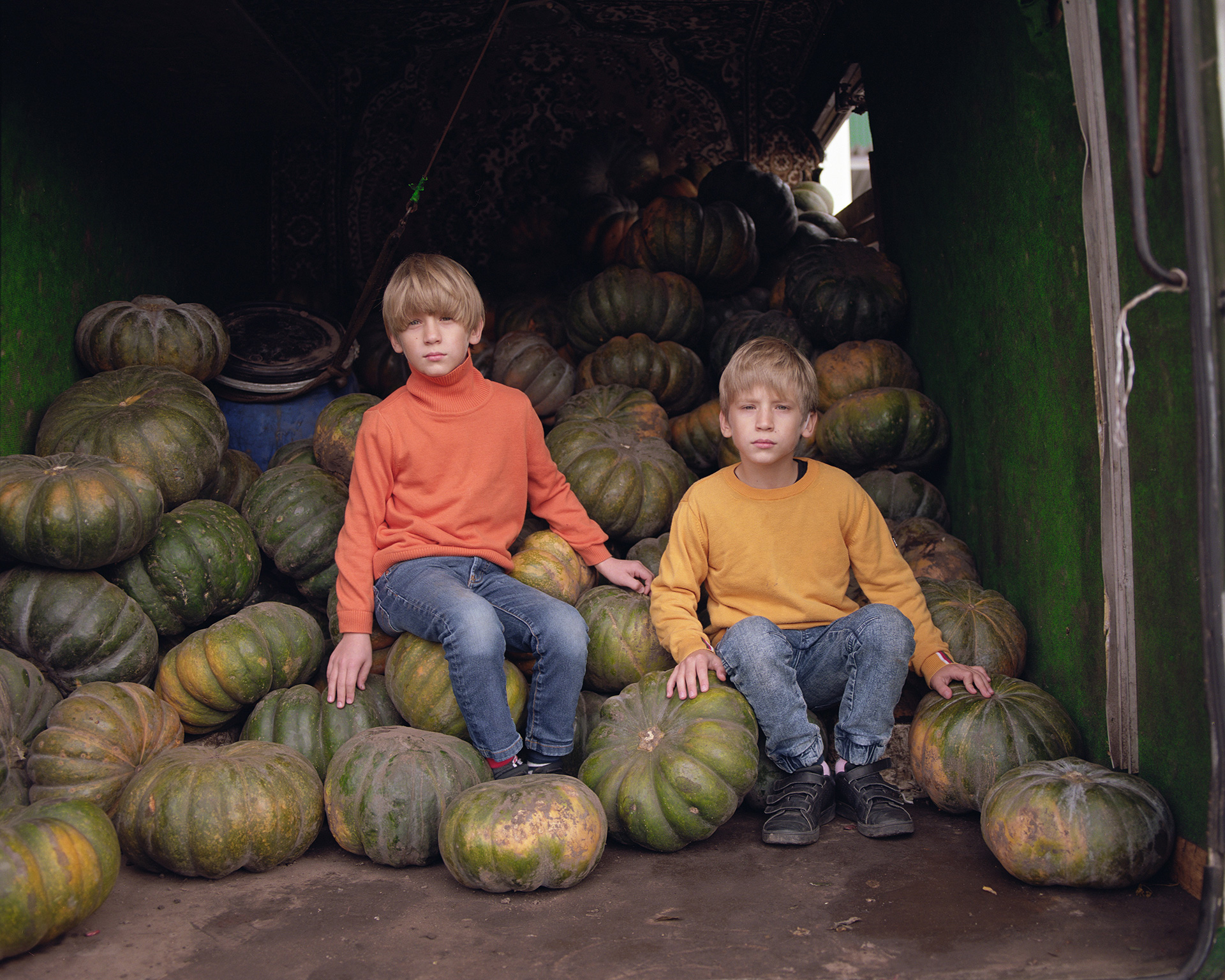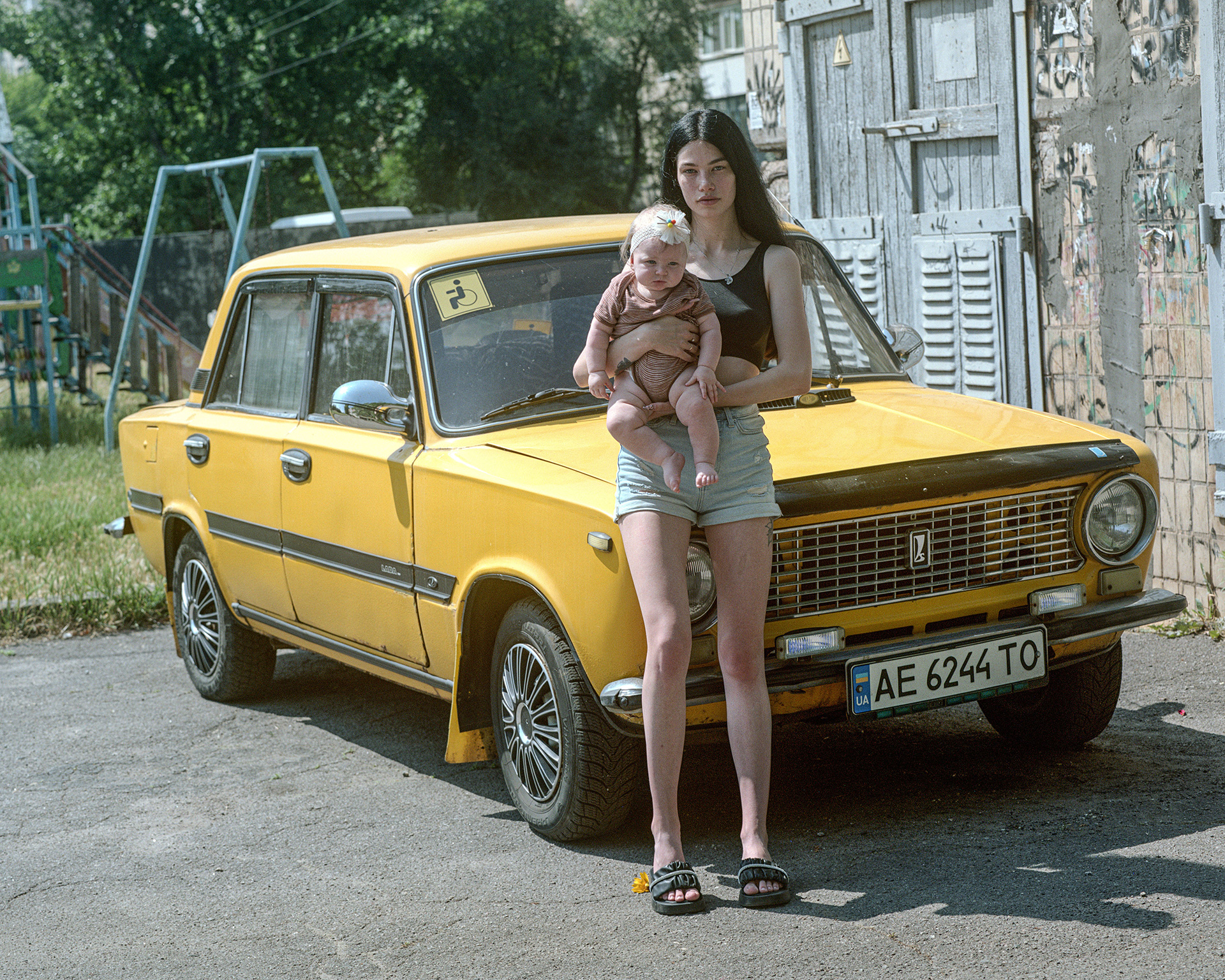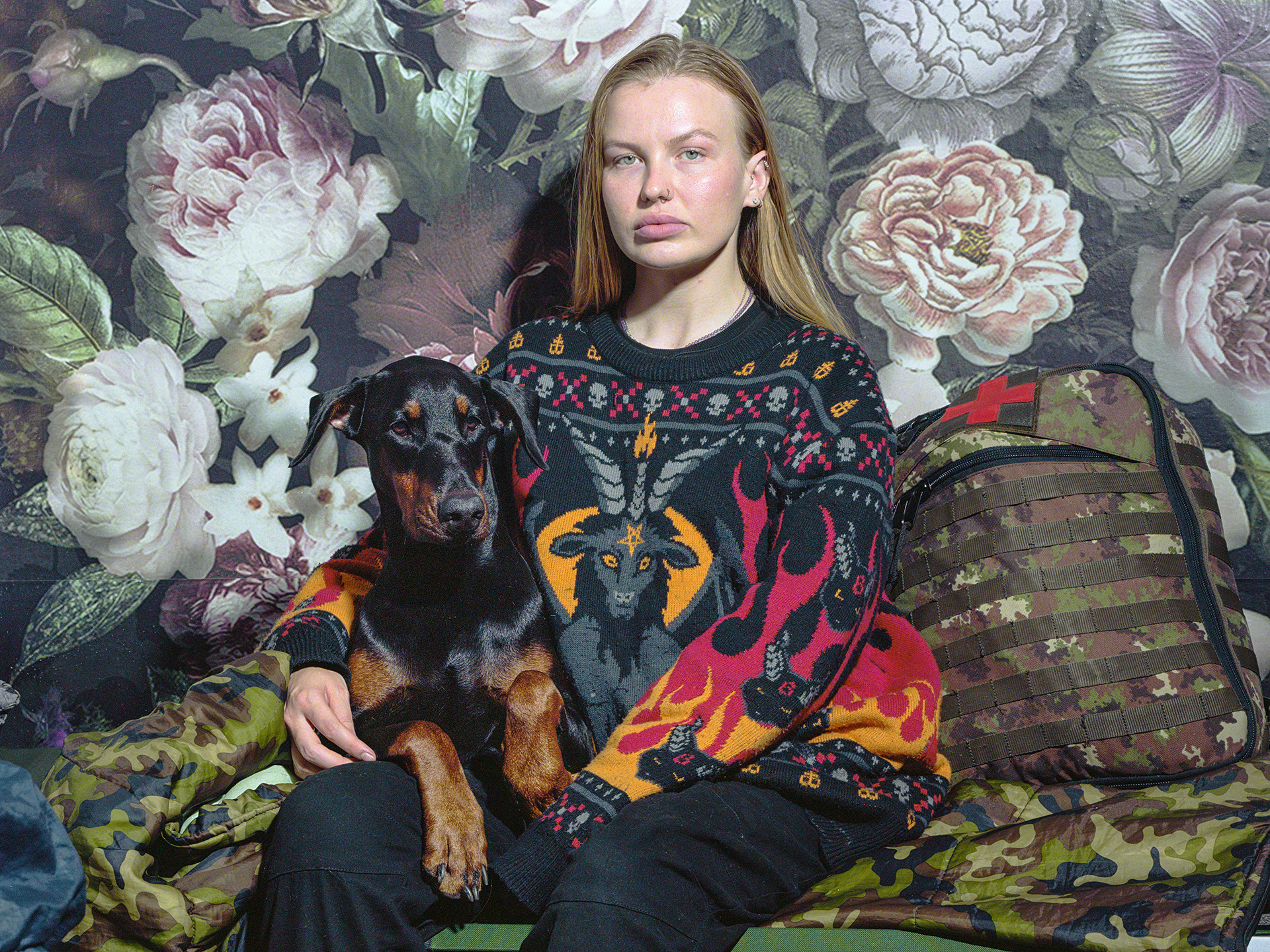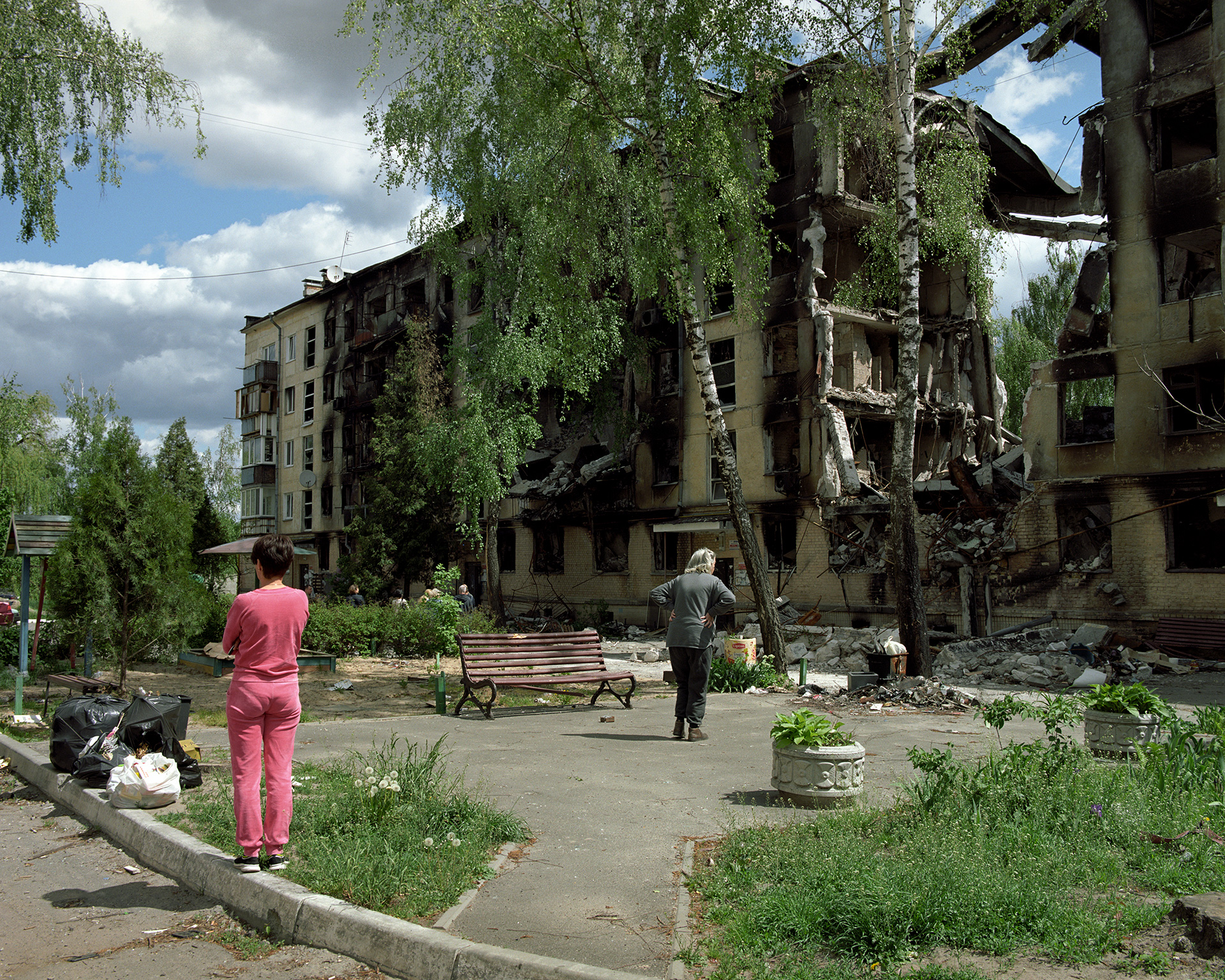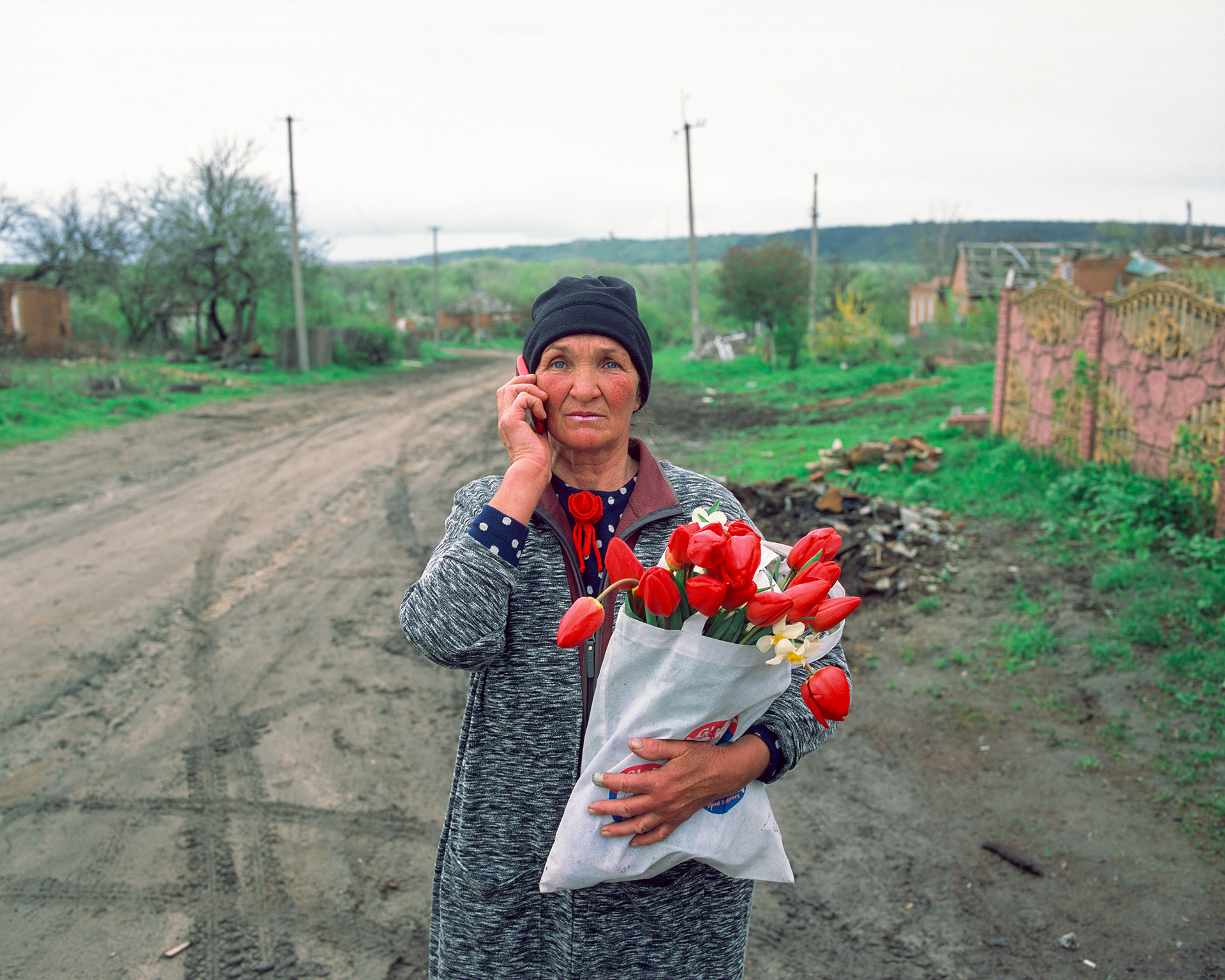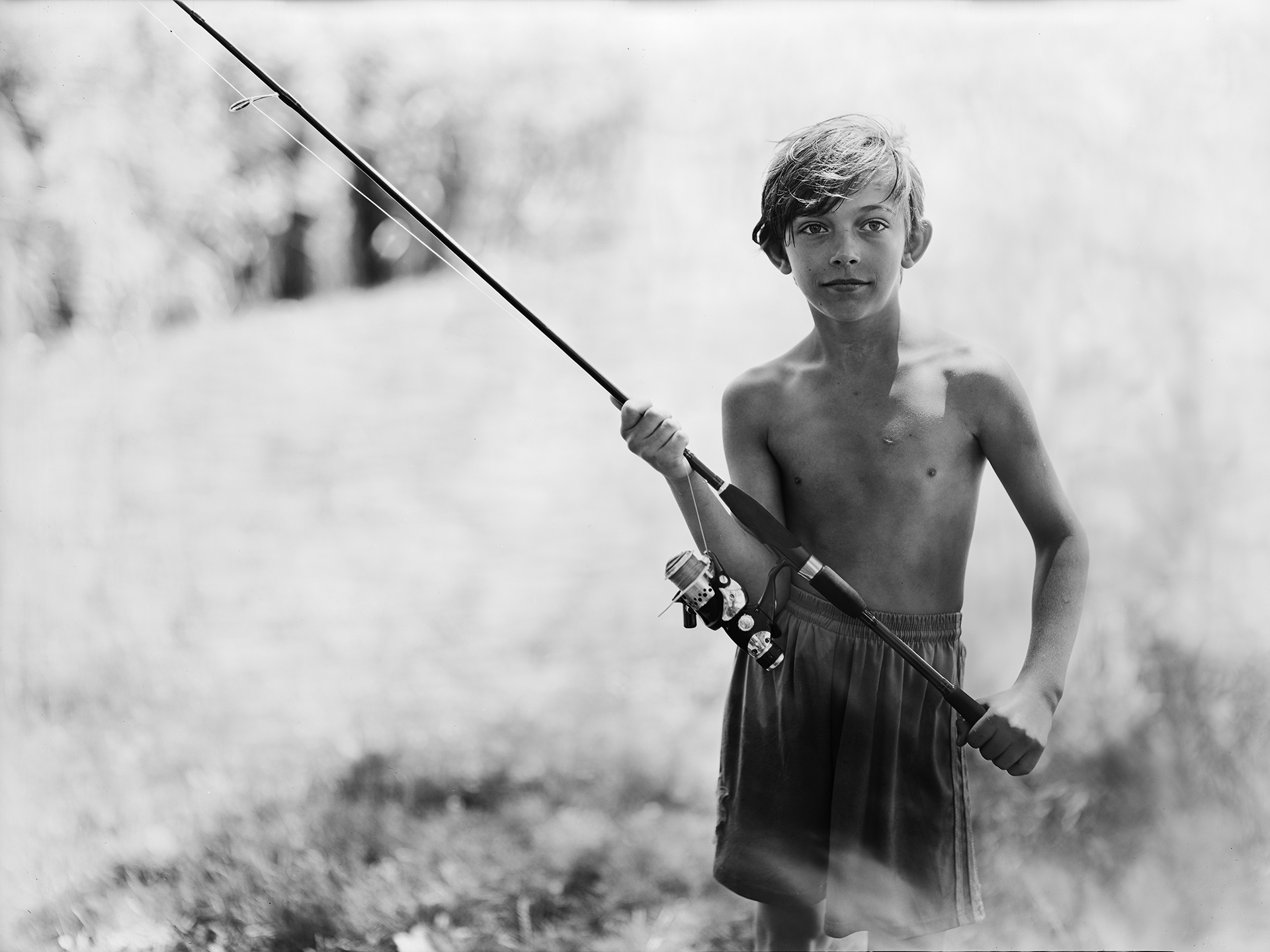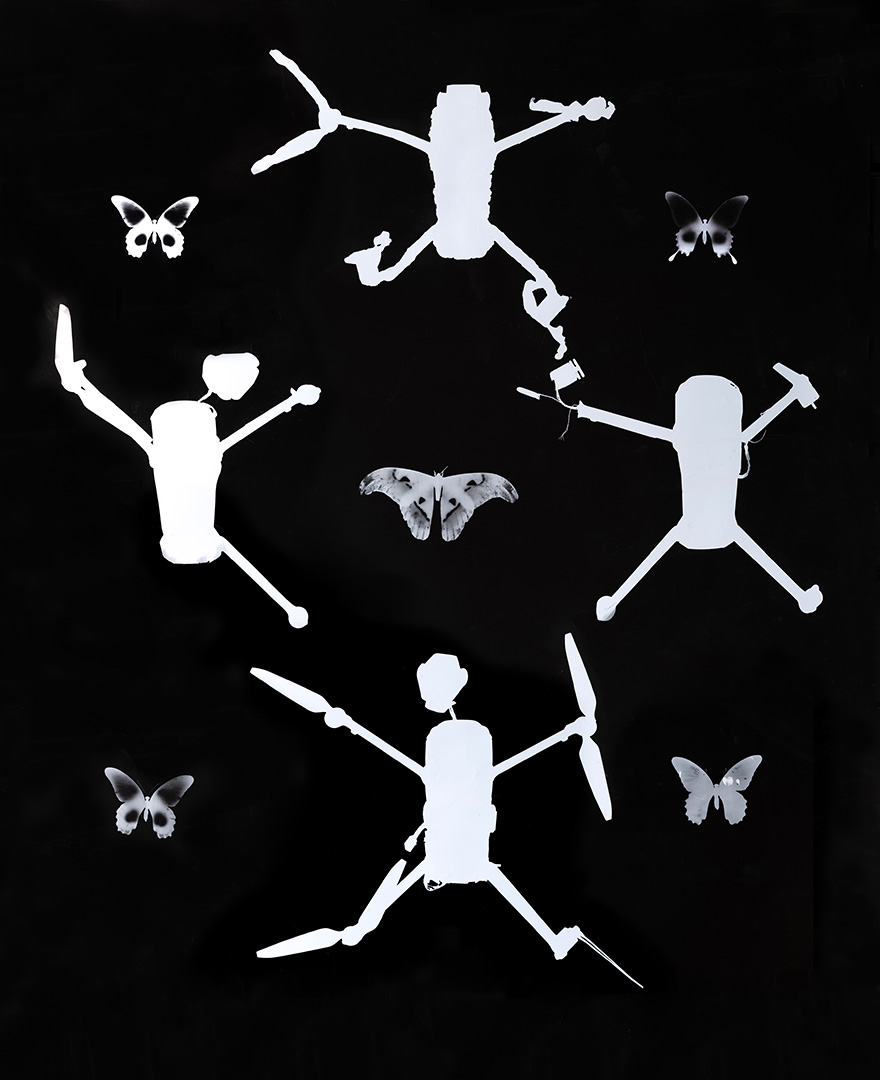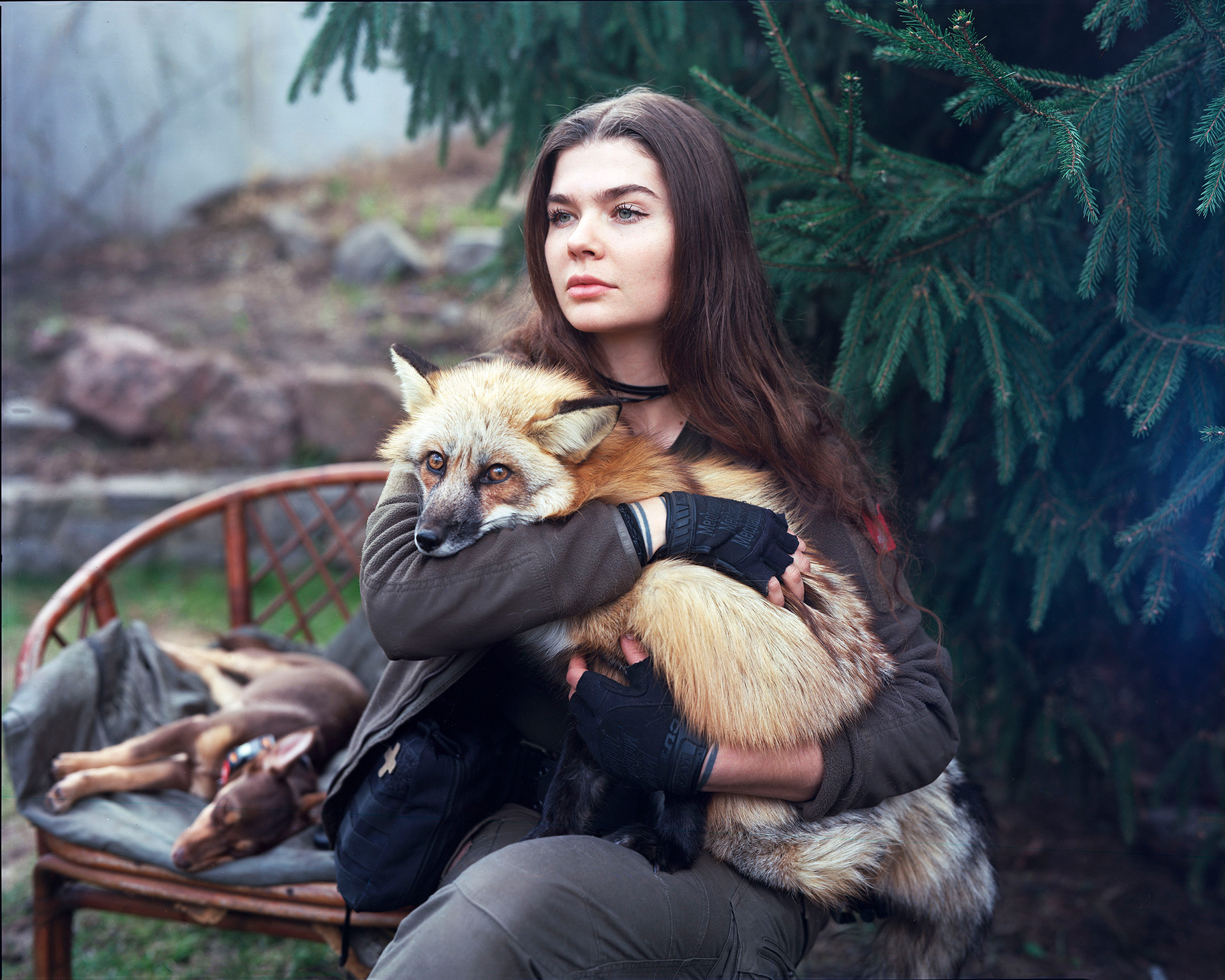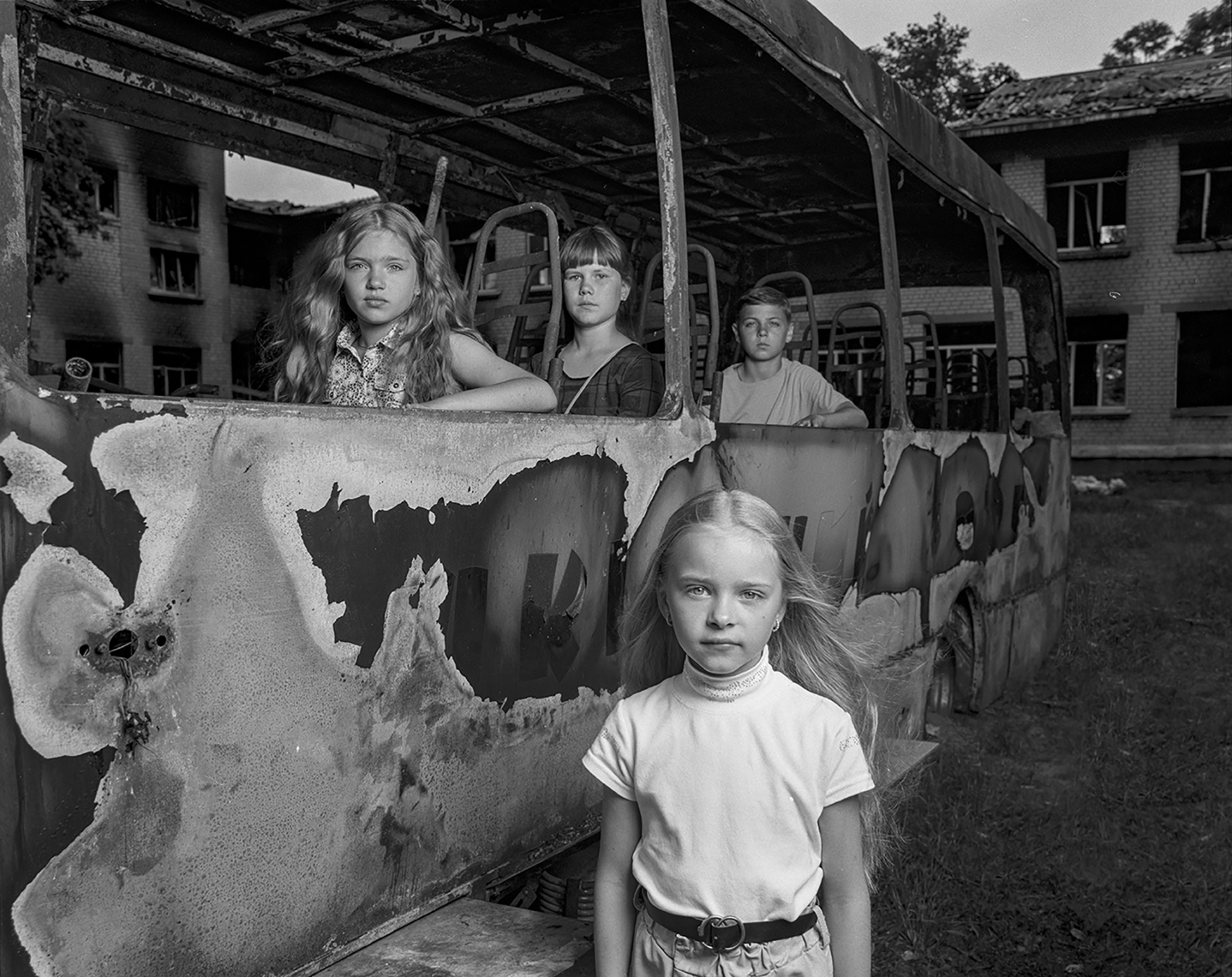
Emilia, Ariana, Polina, and Vlad studied at the secondary school in Bogdanovka, a small village forty kilometres from Kyiv. Bogdanovka was under occupation for more than a month. During that initial month of the PostcodeUkraine project, I witnessed the lack of support for people who had lost everything. One quickly realised that many people would not survive without humanitarian aid deliveries. The West often struggles to use the term genocide—not because it is inappropriate when applied to the russian invasion of Ukraine—but because it carries with it the obligation to act. At Bogdanovka school, the children appeared like ghosts, floating through the ruins of one of the schools that the russian army first blew up and then mined during their retreat. The familie asked me if I would return to photograph them when they have rebuilt their school
In 2024, during the first days of the siege of Mariupol, I, like millions of others, saw the Boy in the Blue Blanket. The first very young victim of the full-scale invasion, with hundreds of others yet to come. The boy wrapped in a bloodied blue blanket, I remember, stood before my eyes for weeks, and it was so terrifying there were no words: my daughter, my golden child, precious and deeply wanted, was the same size and age, the same fair, round-cheeked blonde – and my mind fell into the abyss of this chthonic horror, imagining that the same could happen to her. When I saw those photos of his parents rushing through the hospital carrying him in their arms, I felt my daughter's weight in mine, and my heart felt as though it was stopping, so painful was it.
It's been almost five years, and despite having quite a strong stomach (which comes in handy when someone needs support after losing their loved ones and wants to talk to you about their pain, or when you have to meet orphans or children who lived through the occupation and read stories with them instead of collapsing, imagining how much pain these people have had to endure), I'm still very sensitive to images of children who look like my daughter. She's almost six, tall and skinny, with those big, bright eyes, an open, fearless gaze, and long blonde hair, and it kills me that one day her whole world, everything she and her friends love, the school they go to, the park they play in, might turn into debris.
After all, the film showing the same story of the death of the Boy in the Blue Blanket got an Oscar, a red carpet, and a reception honouring people wearing black tie. Surprisingly, it did not fucking help stop the war. Mark Neville writes that the West often struggles to use the term genocide – not because it is inappropriate when applied to the Russian invasion of Ukraine, but because it carries with it the obligation to act. We know by now that no one's really acting, though there is enough power in the world to stop Russia completely, to make it impossible for it to kill us and our children, and there can't be a second opinion on whether this war is righteous or whether the sustained, systematic killing of civilians and the destruction of civilian infrastructure can be tolerated or justified at all.
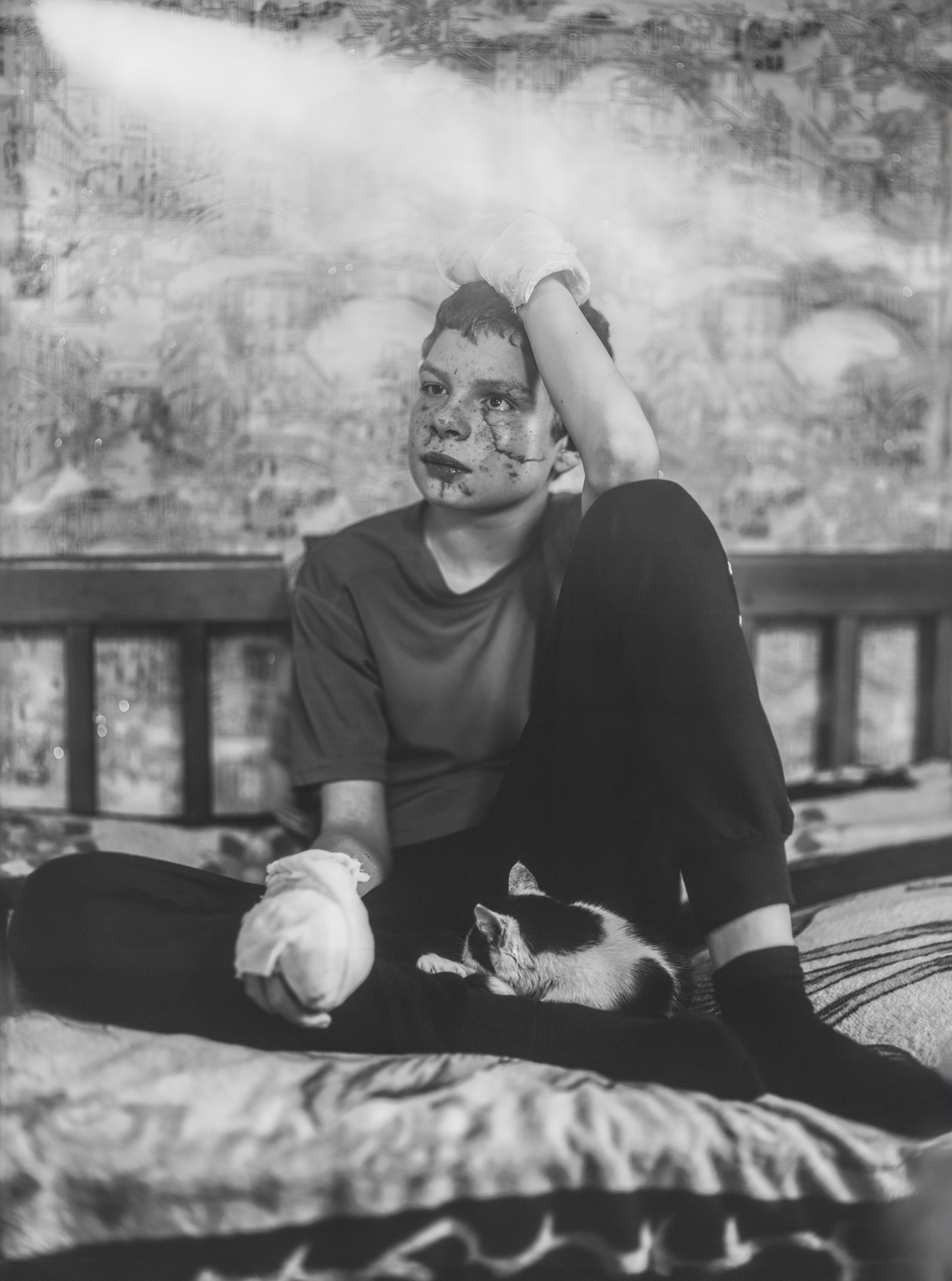
I've done my homework and read Regarding the Pain of Others several times, and I know it does not and would not work. Still, I want people who dare to say, "There's always the other side of the conflict," and "It's not only Russia that's responsible," or (honestly, my favourite), "You'd better just stop fighting," to find themselves in a situation where, in those photographs from Postcode Ukraine, they would, for a moment, clearly see the faces of their own kids, their families, their loved ones. Just, you know, to try it on before getting on with the "second opinion" and "other side" thing.
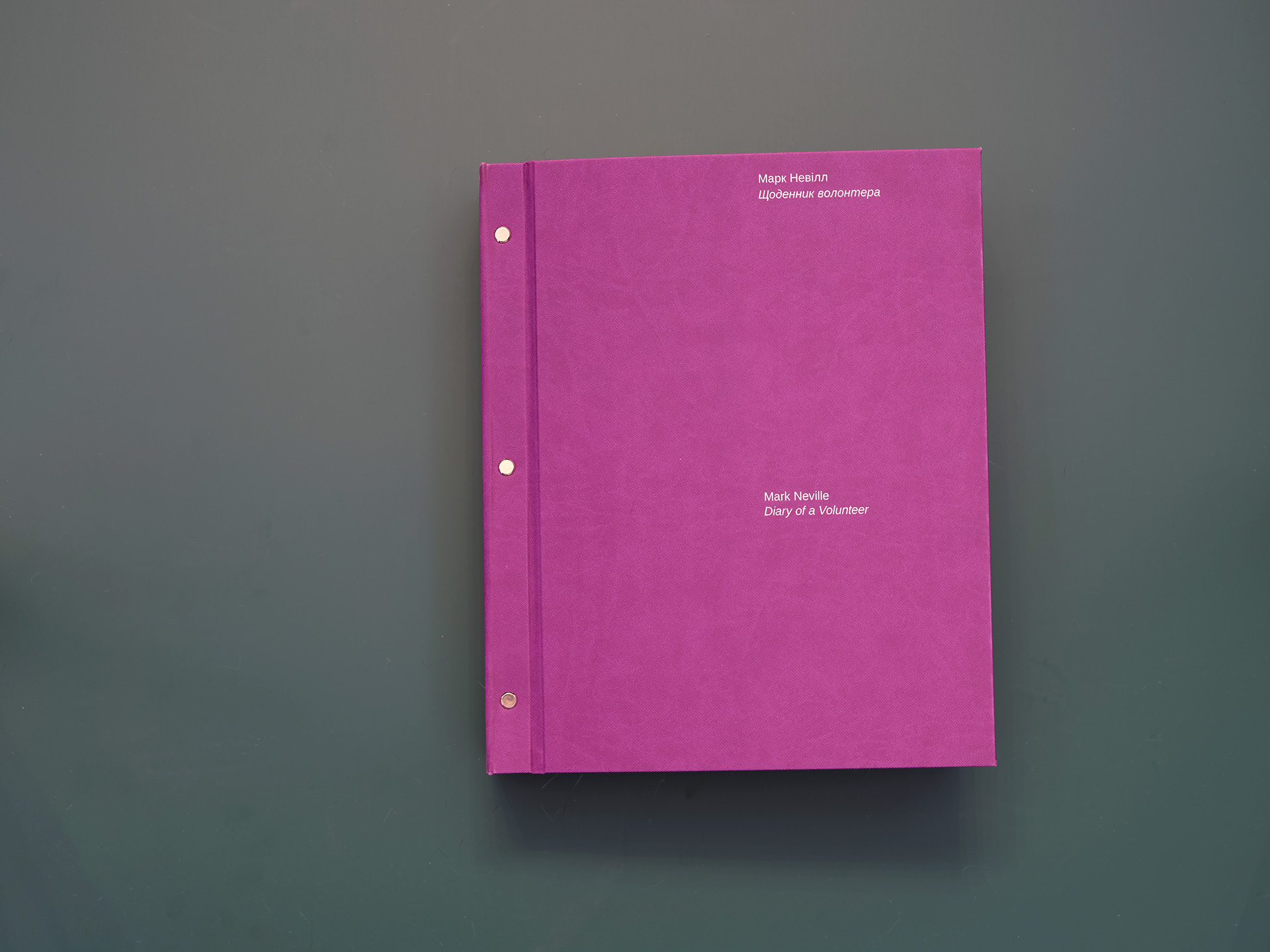
Diary of a Volunteer is both an exhibition and a fundraising project.
Postcode Ukraine is a Kyiv-based charity founded in 2022 to support grassroots humanitarian organisations and volunteer groups working directly with communities affected by the war
*US supporters of Postcode Ukraine can make tax-deductible donations through our US partner, Shield of Freedom, a registered 501(c)(3) nonprofit supporting Ukraine. Donations made through this campaign are received and acknowledged by Shield of Freedom and, through its grant programme, support Postcode Ukraine's humanitarian aid initiatives in Ukraine.
Since 2022, Postcode Ukraine has directly funded more than $500,000 of humanitarian aid projects across Ukraine
Through photography, film and humanitarian action, Postcode Ukraine works to ensure that the experiences of ordinary Ukrainians are seen, remembered and supported.